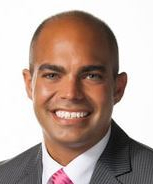
In Memoriam: CPR Chairman Emeritus Charles Renfrew

By Russ Bleemer

The International Institute for Conflict Prevention and Dispute Resolution mourns the loss of Chairman Emeritus Charles B. Renfrew (pictured above), who died in San Francisco on Dec. 14 at age 89.

Renfrew had served nearly 15 years as board chairman when he stepped down from the post in 2011. He remained active with the organization and continued his longtime private practice focusing on mediation and arbitration, as well as corporate investigations.

He also had experience in a wide variety of specialized alternative dispute resolution processes, including early neutral evaluation and mini-trials, and acted as a special master.

“It is difficult to imagine a more impressive career than that of Charlie Renfrew,” said CPR President & CEO, Noah J. Hanft. “His commitment to public service was apparent to all who knew him, as was his commitment to the CPR Institute. CPR was indeed fortunate to have Charlie serve as its Chair for 15 years, and for far longer than that he was a clear and strong voice articulating the importance of CPR’s mission—continually seeking better ways to prevent and resolve disputes. Charlie was both a man of substance and a man of character with a warmth and kindness which was evident to all who knew him.  I will never forget that he was the first person to reach out to me after I was named CEO and his warm, supportive messages from that day forward. Charlie was a true gentleman and we will all miss him.”

Renfrew’s ADR work began during a storybook legal career that included private practice, in-house corporate representation and advocacy, the federal judiciary, and the U.S. Justice Department, as well as social activism.

A veteran who served both in the U.S. Navy in World War II and in the U.S. Army during the Korean conflict, Renfrew began his legal career at San Francisco’s Pillsbury, Madison & Sutro in 1956, becoming partner a decade later.

He departed the firm when President Richard Nixon appointed him to the U.S. District Court in California’s Northern District in 1972, where he stayed until President Jimmy Carter appointed Renfrew Assistant Attorney General under Benjamin Civiletti in 1980.

But when Carter was defeated by Ronald Reagan later the same year, Renfrew returned to Pillsbury.  After a two-year stint, he became Vice President of Legal Affairs for Chevron Inc., where, in 1988, he joined CPR’s board in 1988.

In 1993, Renfrew returned again to private practice as a partner at LeBoeuf, Lamb, Greene & MaCrae after retiring from Chevron.

After four years, he opened the Law Offices of Charles B. Renfrew in San Francisco, which became the longest-running job in his career, focusing on alternative dispute resolution.

In addition to his work at CPR, Renfrew served on the boards of Princeton University, Claremont University Center, the San Francisco Symphony, the San Francisco Museum of Modern Art, the NAACP Legal Defense and Education Fund, the Lawyers Committee for Civil Rights and the Council for Civic Unity. He also served as a director at Chevron.

Renfrew was active in bar associations and taught at Boalt Hall School of Law, University of California at Berkeley. He graduated with a BA from Princeton University, and from the University of Michigan Law School.

Renfrew was known for an unusual approach on the bench in the criminal cases he oversaw on the federal bench.  After sentencing, the judge would follow up on the convict’s service, and occasionally would visit the institutions to check on their rehabilitation progress.

Renfrew notably ordered specific sentences for community service as part of the condition of offenders’ release, to encourage reflection by the convict, and lower the odds of recidivism.  See Bob Egelko, “Charles Renfrew dies; Democrat appointed SF federal judge by Nixon,” San Francisco Chronicle (Dec. 26)(available at http://bit.ly/2m0ZbI7), and Carol Spiezio, Charles Renfrew, Former Federal Judge, Dies at 89,” The Recorder (Dec. 19)(available at http://bit.ly/2CGt7jQ).

Throughout his career, Renfrew spoke and wrote often about his deep faith in the effectiveness of alternative dispute resolution, and his expectations for its continued growth.  He frequently cited mediation and arbitration’s success as the core reason for his decades of work at the CPR Institute.

Renfrew was nearly evangelical at CPR meetings and in articles in his focus on developing ADR, and creating opportunities for its growth and improvement. During his years on the CPR board, he spearheaded the organization’s emphasis on international work, and measures to prevent conflicts, among numerous other conflict resolution efforts.

In a 2009 Alternatives article reflecting on CPR’s 30th anniversary, Renfrew, with his characteristic optimism about conflict resolution, and also characteristically looking ahead, concluded,

The future for the CPR Institute is promising, too, if we continue to build on our strengths and uniqueness. We must continue to involve the users of ADR services, not just be an organization of ADR providers. If CPR continues to be supported by those who recognize its unique role in the ADR movement, it will continue to flourish and perform the leadership role it has since its inception.

Renfrew is survived by his wife, Barbara Jones Renfrew, who often joined her husband at CPR Annual Meetings and events, as well as eight children, 21 grandchildren and two great-grandchildren.

A memorial service was held in San Francisco on Jan. 6.  The family suggested donations in his name to the NAACP Legal Defense Fund, where he also served as a board member.


*Russ Bleemer is the editor of CPR’s award-winning magazine, Alternatives

Court Backs Award for Class Arbitration, Refusing to Wait for Supreme Court’s Decision

By Shravanthi Suresh-Silver

A recent Wisconsin federal trial court decision backs confirmation of an arbitration award even though the defendant asked for it to be stayed until the class waivers-arbitration cases currently before the U.S. Supreme Court are decided.

The arbitrator in the case had backed a class arbitration process on behalf of employees, who said that the defendant, Waterstone Mortgage Corp., a Pewaukee, Wis.-based lender, failed to pay its loan officers overtime.

The three consolidated cases on waivers that ban class processes in favor of mandatory individual arbitration were argued together in the Supreme Court on Oct. 2. A decision on the relationship between the Federal Arbitration Act and the National Labor Relations Act is expected soon.

In Herrington v. Waterstone Mortgage Corp., No. 11-cv-779-bbc (U.S.W.D Dec. 4)(available at http://bit.ly/2BgULTT), U.S. District Court Senior Judge Barbara B. Crabb, based in Madison, Wis., concluded that plaintiff’s claims would have to be resolved through arbitration under the parties’ agreement, and that the NLRA gave the plaintiff the right to join other employees in her case.

Herrington also is notable because the court rejected an arbitrator bias argument and addressed claims that the arbitrator, former Second U.S. Circuit Court of Appeals Judge George Pratt, slept through key proceedings.

Plaintiff Herrington commenced arbitration on March 23, 2012, under her employment contract. Arbitrator Pratt issued an order determining that the arbitration could proceed as a collective action. Ultimately, the Wisconsin federal court opinion by Senior Judge Crabb notes, 174 class members opted into the arbitration.

On July 5, 2017, Pratt issued a final decision, holding that Waterstone was liable under the Fair Labor Standards Act for unpaid minimum wages and overtime and attorney fees and costs, but not liable under Wisconsin statutory or contract law. He ordered Waterstone to pay nearly $7.3 million in damages; $3.3 million in attorney fees and costs and an incentive fee of $20,000 to be paid to Herrington.

The plaintiff moved for confirmation of the award under 9 U.S.C. § 9 in the Wisconsin federal court, while the mortgage company moved to vacate or modify the award, asking Senior Judge Bragg to stay any action relating to the award until the U.S. Supreme Court reaches a decision in the consolidated cases of Ernst & Young LLP v. Morris; Epic Systems Corp. v. Lewis, and NLRB v. Murphy Oil USA Inc. (For more information on the cases, see CPR Speaks at http://bit.ly/2yWjWuf.). In the cases, the Court is considering whether class and collective action waivers in arbitration agreements violate the National Labor Relations Act.

The plaintiff countered by asking for sanctions against the defendant lender, arguing that the objections to the award’s confirmation were frivolous.

The court denied the defendant’s motions to stay and to vacate the arbitration award, as well as Herrington’s sanctions motion. The court confirmed the arbitration award, with one modification to correct the mathematical error identified by both parties.

In arguing to stay any action relating to the award until the Supreme Court reaches its decision in the consolidated cases, Waterstone suggested that if the Supreme Court concludes that class and collective action waivers do not violate the National Labor Relations Act, the defendant will be able to rely on that decision to file a motion under Federal Rule of Civil Procedure 60(b)(6) challenging Bragg’s March 2012 decision in the case striking the class waiver in the company’s employment agreement.

In noting that the defendant’s assumption was flawed, the Wisconsin court reemphasized that “a change in law showing that a previous judgment may have been incorrect is not an ‘extraordinary circumstance’ justifying relief under Rule 60(b)(6).” (Quoting Nash v. Hepp, 740 F.3d 1075, 1078 (7th Cir. 2014)(“Rule 60(b) cannot be used to reopen the judgment in a civil case just because later authority shows that the judgment may have been incorrect.” (Internal citation omitted.)), Bragg noted in her opinion that the defendant “made no attempt to explain why a change in the law would justify reconsideration of a decision made in this case five years ago.”

The court also noted that the ultimate decision allowing the case to proceed on a collective basis was made by Arbitrator Pratt, not the court. Bragg noted that Pratt said he was bound by her finding that the class waiver provision was invalid under the National Labor Relations Act.

But the opinion also says that Pratt found the employment agreement’s arbitration clause was ambiguous. Despite the waiver, he noted, the clause also stated that arbitration should proceed “in accordance with the rules of the American Arbitration Association,” which permits class arbitration.

The arbitrator noted that the defendant “at the very least created an ambiguity, which must be construed against [Waterstone,] the party who drafted the Agreement.”

The opinion says that the arbitrator “also noted plaintiff’s argument that the language of the so-called ‘waiver’ clause should actually be read as permitting class or collective arbitration, rather than prohibiting it, though the arbitrator chose not to resolve that dispute.”

Wrote Senior Judge Bragg,

In other words, the arbitrator’s discussion suggests that he believed there were independent bases for permitting collective arbitration, aside from this court’s previous decision. Thus, it is far from clear that the Supreme Court’s decision . . . would cause the arbitrator to change his decision to permit collective arbitration.

The court also stated that the case had been pending since 2011 and that it was not at an early stage. It was noted that a further delay would prejudice the plaintiff, who had been waiting several years through numerous delays to recover unpaid wages.

Additionally, despite the defendant’s assertion that a stay would “greatly simplify the issues and reduce the burden of litigation,” Bragg wrote that she was not persuaded that the Supreme Court’s decision will necessarily simplify the issues in this case, however it rules.

There were other significant issues. The defendant argued that Arbitrator Pratt “demonstrated bias in favor of plaintiff when he sent a survey to potential class members as part of his decision whether to certify a class.” The defendant stated that when the survey was submitted, discovery on class certification was closed and the arbitrator had said that the plaintiff’s evidence supporting class certification was insufficient.

Additionally, Waterstone argued that the phrasing of the survey was biased in favor of plaintiff.

But Bragg dismissed the bias claims.  She held that “there is nothing about the arbitrator’s decision to send out the survey and consider the responses that suggests bias in favor of plaintiff or against defendant.” The inquiries, the opinion noted, were “simply ‘yes’ and ‘no’ questions regarding the experiences of putative class members.”

Furthermore, the arbitrator permitted the parties to argue and brief their views regarding the survey, “and issued a written decision explaining his reasons for considering the results.” Pratt “later issued a well-reasoned 16-page written decision on class certification,” Bragg noted in her opinion, “explaining the survey results and his conclusion that the results supported class certification.”

Finally, the arbitrator was clear that he understood the evidentiary limitations of the survey results. Therefore, the court dismissed the defendant’s allegations of arbitrator bias.

The defendant also argued that the award should be vacated because Arbitrator Pratt “slept through portions of the evidentiary hearing,” the opinion says.

Waterstone argued that the arbitrator’s “alleged sleeping amounts to abdication of his duties and qualifies as misconduct sufficient to justify vacating the arbitration award,” the opinion says.

Senior Judge Bragg said she agreed with Plaintiff Herrington that if the defense believed Pratt slept during the hearing, it should have asked for a break. The court noted that there appeared to be a factual dispute regarding whether Pratt dozed. “To raise this issue now seems far too late,” the opinion says.

Bragg emphasized that even if the arbitrator dozed off, the defendant “had pointed to nothing suggesting that the arbitrator was prejudiced by the alleged napping.” While Waterstone claimed that Pratt slept during important testimony, it failed to identify any specific testimony that he missed.

In dismissing the defendant’s motion that the arbitration award should be vacated, the court noted that the defendant’s arguments about prejudice are based entirely on speculation.

* * *

The author is a CPR intern.

US Dist Ct Upholds Summary Disposition in Arbitration

Kantor Photo (8-2012)By Mark Kantor

Arbitrators and counsel often wonder whether summary disposition of an arbitral dispute is consistent with the requirements of applicable arbitration law and rules.  In Weirton Medical Center, Inc. v. Community Health Systems, Inc., N.D. West Virginia (Civ. Action No. 5:15CV132, Dec. 12, 2017) (available here – https://scholar.google.com/scholar_case?case=4968969295311804275&hl=en&lr=lang_en&as_sdt=20003&as_vis=1&oi=scholaralrt), Judge Frederick Stamp of the US District Court for the Northern District of West Virginia upheld last week an arbitration award on summary disposition issued under the 2009 AAA Commercial Arbitration Rules against an attack on grounds that summary disposition of the dispute without discovery and an evidentiary hearing was improper.  The District Court instead concluded that “that the arbitrator’s procedural determination that summary disposition was appropriate has a reasonable basis in the parties’ agreements. Accordingly, the arbitrator did not exceed his powers in disposing of the arbitration on summary disposition.”

Judge Stamp’s opinion involves a number of interesting issues, including collateral estoppel.  But for purposes of this post I focus only on the authority of the arbitrator to make a summary disposition.  The situation was complicated by the fact that there were two arbitration agreements.  Each contract referred to the then-current version of the AAA Commercial Arbitration Rules (i.e., the 2009 Rules).  But one also referred to the “substantive and procedural laws of the State of Tennessee applicable to contracts made and to be performed therein” and the other referred to the “substantive and procedural laws of the State of West Virginia applicable to contracts made and to be performed therein” (footnotes and many citations omitted below).

The Interim CFO agreement invokes the “substantive and procedural laws of the State of Tennessee applicable to contracts made and to be performed therein,” … the Turnaround Agreement invokes the “substantive and procedural laws of the State of West Virginia applicable to contracts made and to be performed therein,” … and both agreements invoke the “arbitration rules of the American Arbitration Association (“AAA”) in effect on the date of” the agreements.

The claimant in the arbitration, Weirton, found its claim summarily dismissed in arbitration on statute of limitation grounds.   Weirton argued both before the arbitrator and later in the District Court that the procedural laws of Tennessee and West Virginia prohibited summary dispositions in the circumstances.  By operation of the arbitration agreements, thus asserted Weirton, the arbitrator was bound to follow those laws and deny summary disposition.  The arbitrator concluded, however, that the arbitration agreements were subject for procedural issues to the AAA Commercial Arbitration Rules and that summary disposition was proper.  The arbitrator then dismissed Weirton’s claims “as a matter of law” as time-barred by the applicable statute of limitation.  Weirton thereafter sought to vacate that award on grounds that the arbitrator exceeded his powers and manifestly disregarded applicable law in so ruling.

Weirton argues that the arbitrator exceeded his powers by granting summary disposition rather than permitting discovery and holding a hearing. It argues that the arbitration agreements, the AAA Rules, and West Virginia and Tennessee’s Rules of Civil Procedure did not permit summary disposition. Further, Weirton argues that summary disposition was premature because no discovery had been conducted and factual disputes were evident.

Weirton made these same arguments before the arbitrator, and he rejected them. The arbitrator expressly concluded that the 2009 AAA rules provided him “discretion to hear and grant motions for summary disposition.” …. He concluded that summary disposition was not premature and that Weirton was not entitled to discovery because “the asserted claims fail as a matter of law.” …. The arbitrator also implicitly determined that this matter was governed by the AAA rules and not the Rules of Civil Procedure of Tennessee or West Virginia.

The District Court began its analysis of this issue by observing that US courts will not question an arbitrator’s decision on procedural issues “so long as it has some reasonable basis in the parties’ agreement.”

It is well settled that an arbitrator has jurisdiction to “adopt such procedures as are necessary to give effect to the parties’ agreement” and that “`procedural’ questions which grow out of the dispute and bear on its final disposition are presumptively. . . for an arbitrator[] to decide.” . Thus, an arbitrator is empowered to make a determination on procedural issues, and courts will not question that determination so long as it has some reasonable basis in the parties’ agreement.

The arbitration agreements provided for a situs in those jurisdictions, thereby (said Weirton) importing the procedural rules of those locales in any event.  According to the petitioner, the procedural laws of the two States “require full discovery and a full evidentiary hearing.”  Weirton also contended that the references in the contracts to the procedural law of Tennessee and West Virginia, respectively, imported the civil procedure rules of those States.  However, according to the Court, “[t]he arbitrator implicitly concluded that the AAA rules rather than West Virginia or Tennessee’s Rules of Civil Procedure applied to determine whether summary disposition was proper.”  That conclusion, said the Judge, had “a reasonable basis in the parties’ agreements.”  Therefore, the arbitrator’s conclusion was proper.

To that end, Weirton argues that the arbitration agreements do not provide authority to dispose of the case on summary disposition. Both arbitration agreements contain substantially identical language. Each provides for binding arbitration of any dispute arising out of or relating to the Interim CFO Agreement or the Turnaround Agreement, both invoke the 2009 AAA rules, both require a written and reasoned award, and both contain choice of law provisions. The Interim CFO Agreement provides for arbitration in Brentwood, Tennessee and for the application of Tennessee law. The Turnaround Agreement provides for arbitration in Pittsburgh, Pennsylvania and for the application of West Virginia law.

First, Weirton argues that, because the arbitration agreements provide for binding arbitration at particular locations, the parties intended to require full discovery and a full evidentiary hearing. It also argues that the arbitration agreements invoke the AAA rules and the procedural laws of Tennessee and West Virginia, none of which allow for summary disposition without an opportunity for discovery.

Second, Weirton argues that the arbitrator was obligated to apply West Virginia and Tennessee’s Rules of Civil Procedure, which, Weirton argues, would not have permitted summary disposition without adequate discovery. The arbitrator implicitly concluded that the AAA rules rather than West Virginia or Tennessee’s Rules of Civil Procedure applied to determine whether summary disposition was proper. This Court finds the arbitrator’s conclusion to have a reasonable basis in the parties’ agreements.

Reasoning in a manner that gave effect to the arbitrator’s authority to resolve ambiguities and to to respect the function of arbitration, rather than a textual analysis of the contracts, the Court held that these agreements made clear that “the AAA rules governed procedural matters in the arbitration … [and] application of those States’ Rules of Civil Procedure in an arbitration proceeding would be wrong….”

Read as a whole, these agreements make clear that the AAA rules governed procedural matters in the arbitration, while Tennessee and West Virginia law governed the substantive legal issues. Although the choice of law provisions provide that the states’ procedural law applicable to contracts was to be applied, application of those States’ Rules of Civil Procedure in an arbitration proceeding would be wrong, especially in light of the express invocations of the AAA rules.  At best, these choice of law and procedural rules provisions create ambiguity as to what procedural law applied, a determination well within the arbitrator’s jurisdiction. The arbitrator’s decision to apply the AAA rules rather than the States’ Rules of Civil Procedure has a reasonable basis in the parties’ agreements. Thus, the arbitrator’s determination that summary disposition was procedurally proper is entitled to deference.

Judge Stamp also rejected the notion that designating a location for the arbitration had the effect of importing that locales’ judicial procedure rules.

Weirton argues that the arbitration agreements required discovery and full evidentiary hearings because they specified the locations for such hearings. However, these designations of sites for arbitration hearings are not equivalent to express requirements that the parties conduct discovery and participate in a full evidentiary hearing on claims that fail as a matter of law.

Interestingly, the Court found authority for arbitral summary judgment in Rule L-4 of the Large, Complex Commercial Case Procedures of the AAA Commercial Arbitration Rules.  Rule L-4 only states generally that arbitrators may “take such steps as they may deem necessary or desirable to avoid delay and to achieve a just, speedy and cost-effective resolution of Large, Complex Commercial Cases.”  Notably, the 2009 AAA Commercial Arbitration Rules did not include a provision expressly referring to summary dispositions, unlike Rule R-33 of the current 2013 version of those Rules which does conditionally authorize dispositive motions (“R-33.  Dispositive Motions.  The arbitrator may allow the filing of and make rulings upon a dispositive motion only if the arbitrator determines that the moving party has shown that the motion is likely to succeed and dispose of or narrow the issues in the case.”).

While the arbitration agreements do not expressly permit summary disposition, they do not expressly prohibit it either. The agreements invoke the 2009 AAA rules, which provide a set of procedural rules including requiring arbitrators to “take such steps as they may deem necessary or desirable to avoid delay and to achieve a just, speedy and cost-effective resolution of Large, Complex Commercial Cases.” Rule L-4, AAA Commercial Arbitration Rules and Mediation Procedures (2009 ed.).

Perhaps sensing that he was relying only general authority under the Rules, Judge Stamp also buttressed his conclusion by asserting that result was consistent in any event with the civil procedure rules of the two states (“Further, the Rules of Civil Procedure of Tennessee and West Virginia allow for the dismissal of or summary judgment on legally insufficient claims.”).  At bottom, though, the District Court applied a deferential standard of review to the arbitrator’s decision that he had authority under the 2009 AAA Commercial Arbitration Rules to grant summary disposition.

As discussed above, the arbitrator implicitly concluded that the AAA rules rather than the States’ Rules of Civil Procedure applied to the arbitration. This was a procedural matter to be determined by the arbitrator, and this Court will defer to that ruling because it has some reasonable basis in the parties’ agreements. …. Thus, because Tennessee and West Virginia’s Rules of Civil Procedure did not apply to the issue of whether summary disposition was proper, the arbitrator did not manifestly disregard those laws.

The Weirton case therefore stands for the propositions that (1) an arbitrator’s decision to apply arbitration rules rather than a local civil procedure code will prevail even if the underlying agreements refer to local procedural law, so long as the arbitrator reasonably found ambiguity in that contractual language, and (2) authority for dispositive motions in arbitration can be found in general language of the AAA Commercial Arbitration Rules, even in the absence of specific reference to summary dispositions in the applicable Rules (“While the arbitration agreements do not expressly permit summary disposition, they do not expressly prohibit it either.”).

We will have to see if this ruling is appealed to the US Circuit Court of Appeals in due course.

Mark Kantor is a CPR Distinguished Neutral and a regular contributor to CPR Speaks. Until he retired from Milbank, Tweed, Hadley & McCloy, Mark was a partner in the Corporate and Project Finance Groups of the Firm. He currently serves as an arbitrator and mediator. He teaches as an Adjunct Professor at the Georgetown University Law Center (Recipient, Fahy Award for Outstanding Adjunct Professor). Additionally, Mr. Kantor is Editor-in-Chief of the online journal Transnational Dispute Management.

“New and Improved New Year’s Resolutions” For Judges, Politicians and Policy-Makers

By Judge Steven I. Platt (Ret.)

steven_125
As the new year approaches, I welcome the opportunity in this space provided by The Daily Record, to reflect on the last almost 11 years since I “retired” as a full-time judge and entered a very different world of Private ADR, consulting, as well as public speaking, lecturing and teaching for diverse organizations. I have also been lucky enough and honored, during that time, to have been approved by the Court of Appeals to be recalled as a Judge and have done so enthusiastically and learned even more with the added perspective of my other work and experience incorporated into my decision making.

That said—and with I hope the proper degree of humility, as well as a recognition that our hopes and dreams should not be born out of naiveté or unrealistic expectations for ourselves, the three branches of government, or, for that matter, the human race—I offer the following, hopefully improved over previous years, based on new experiences and additional perspectives, suggested 2018 New Year’s Resolutions for Judges, Politicians and Policy-Makers:

1 – Don’t refuse to reference reality when you make personal, political, legal, and even medical decisions. You can aid that process by listening and paying attention to people and ideas with which you do not agree, in lieu of reinforcing or restricting your sights and sounds to those pictures and words which reinforce your previously held views.

2 – Don’t even try to defend the indefensible. It won’t work.

3 – Recognize that isolating yourself, your community and even your country—if you are a President, Governor, Legislator, political or community leader, policy-maker, or even a Judge—will not make the complexity of an increasingly complicated world go away. On the contrary, it will make your decision-making progressively more flawed and exponentially more dangerous to you and those affected by your self-inflicted defective judgement.

4 – Recognize that the choices which you desire are usually not the options that reality dictates that you must choose from. Wishing otherwise won’t change that reality.

5 – Don’t insist that “the other side” accept and subscribe to your perception of reality as a pre-condition to further communication, whether that “other side” is competing with you or is attempting to collaborate with you. Better to analyze and address your counterparts’ interests in the context of their reality if you wish to move your idea or process forward.

6 – If you are trying to persuade a third party of the merits or wisdom of your position on an issue—whether that third party is a jury, judge, the voters of a federal, state, or municipal district or the elected or appointed officials put there by the voters to decide your fate or your client’s fate—do not forget or ignore who those person(s) are and the intellectual world they live in. To do so will be fatal to your cause.

7 – Be intellectually curious if it is within your DNA to be so. If it is not, check with the best and the brightest in the medical profession to arrange a transfusion of DNA from a known intellectually curious person. Your life will be much more interesting and fulfilling.

8 – Recognize that there are many “Monuments to Persistence” whose success in whatever professional, business, personal field they chose was, in large part, the result of their persistence. Persistence in the pursuit of a good idea is worth emulating.My favorite illustration of this came from my now deceased friend and mentor, the first Chief Judge of The District Court of Maryland, Robert F. Sweeney, who in an interview upon his retirement, reflected upon what it took to accomplish what Governor Mandel had described as a “gargantuan task” – the creation and implementation of a new Court, The District Court of Maryland.

On May 5, 1971, as he was sworn in as the first Chief Judge and at the time the only Judge of The District Court, Chief Judge Sweeney said “Insofar as I am able, I shall attempt to make this court what the people of Maryland are entitled to have it be: A Court of integrity and a forum in which the personal and the property rights of all citizens can be freely and fairly adjudicated by judges learn in the law—judges who are dedicated to the principle of equal justice under the law for all.”

Upon his retirement, virtually a quarter of a century later, illustrating the wisdom and concomitant success of persistently confronting the reality of a corrupt culture in accomplishing that goal, Chief Judge Sweeney recounted that experience as follows: “There were judges who were racists, who had alcohol problems, who were wife beaters and who thought they had found the greatest 10-2 job in the world. I outlived the bastards. The whole collection of them.”

The moral of this story is obvious. The Monument is the District Court of Maryland!

9 – Share in the optimism of Bernard Baruch, an advisor to four Presidents, about the future based on his faith “in the power of the human mind to cope with the problems of life.” Share in his conclusion after a lifetime of advising Presidents that “To nothing so much as the abandonment of reason does humanity owe its sorrows.” We should therefore heed the warning based on history and experience that our failures as individuals and communities have been, and will be the consequences of “action without thought” which usually follows thoughts unaccompanied and therefore devoid of analysis.

10 – Believe, as did Bernard Baruch, that our society can in fact solve our problems by placing our trust in the unfettered intellect, reason, wisdom, and compassion of smart individuals not in crowds.


I would footnote these updated suggested “New Year’s Resolutions” with the following afterthought based on my continued observations of all three branches of government and the politics, economics and psychology which drives them: The collective blogosphere, talk radio, cable TV, internet and advocacy groups, politicians, and other public figures—whether they claim omniscience, heavenly blessings or other supernatural powers or origins—do not address any reality except their own. That said, let’s try analytics in 2018. We might like it. In any case, Happy New Year!

This post is reprinted with permission from “A Pursuit of Justice,” a blog by Judge Steven I. Platt (Ret.) that focuses on the intersection of law, economics, politics and the development of public policy.  Judge Platt currently owns and operates his own private Alternative Dispute Resolution Company, The Platt Group, Inc. through which several retired judges and experienced practitioners offer mediation, arbitration and neutral case evaluation services to business, governmental agencies and their lawyers mostly in complex litigation and disputes.  Judge Platt’s experience and vocation make him an expert in conflict resolution particularly in complex disputes whether they are political, economic, legal, or as most often the case all of the above. Judge Platt can be reached at info@apursuitofjustice.com or via his website at www.theplattgroup.com.

The views and opinions expressed in this article are those of the author and do not necessarily reflect the views of CPR.

The EU Mediation Blues: Is there a way to resolve the EU Mediation “Paradox”?

javierBy Javier Fernández-Samaniego

Almost ten years have elapsed since the European Union adopted the Mediation Directive (2008/52/EC) in civil and commercial matters, and four years since the European Parliament acknowledged the so-called “EU Mediation Paradox” [1] in its study “‘Rebooting’ the mediation directive”. The study drew attention to the lack of significant development of mediation, utilized only in less than an average 1% of the cases in courts of Member States in the EU, despite its high success and satisfaction rates when used.

As rightly pointed out in the Report from the Commission to the European Parliament, the Council and the European Economic and Social Committee on the application of Directive 2008/52/EC (Aug 2016)[2], due to the “unofficial” nature of mediation compared to formal court proceedings, it is very difficult to obtain comprehensive statistical data on mediation such as the profile of companies using mediation, number of mediated cases, the average length and success rates of mediation processes.

In what seems to be a fresh verse in the EU Mediation blues song, a new Resolution of 12 September 2017 on the implementation of the EU Mediation Directive (2008/52/EC) issued by the European Parliament[3] notes that certain difficulties exist in relation to the functioning of the national mediation systems in practice. These difficulties are mainly rooted in the adversarial tradition and the lack of a “mediation culture” in the Member States, the low level of awareness of mediation in most Member States, insufficient knowledge of how to deal with cross-border cases and the functioning of the quality control mechanisms for mediators.

In this Resolution, the European Parliament has made the following recommendations:

  1. EU Member States should boost awareness of how useful mediation is and step up their efforts to encourage the use of mediation in civil and commercial disputes, such as through information campaigns, improved cooperation between legal professionals and an exchange of best practices in the different local jurisdictions of EU.
  2. The Commission should assess the need to develop EU-wide quality standards for the provision of mediation services, especially in the form of minimum standards ensuring consistency, while considering the fundamental right of access to justice.
  3. The Commission should assess the need for Member States to create national registers of mediated proceedings as useful sources of information for Commission and mediators across Europe.
  4. The Commission should undertake a detailed study on the obstacles to the free circulation of foreign mediation agreements in the Union and on various options to promote the use of mediation as a sound, affordable and effective way to solve conflicts in internal and cross-border disputes in the Union, considering the rule of law and ongoing international developments in this field.

Lastly, in an apparent call for new rules, the Parliament requests that the Commission offer solutions to extend the scope of mediation to other civil or administrative matters in future regulation and highlights that, despite the voluntary nature of mediation, further steps must be taken to ensure the enforceability of mediated agreements in a quick and affordable manner.

On the brighter side, there are some less worried notes to the EU Mediation blues tune since the Parliament also welcomes the Commission’s dedication to co-financing various projects aimed at the promotion of mediation and training for judges and practitioners in the Member States. It appears that, after ten years’ investment in civil and commercial mediation since the Directive has been adopted, the perseverance will pay off.

The International Institute for Conflict Prevention and Resolution (CPR) through its European Advisory Board is working hard to fulfill the agreed-upon objectives and has recently published a guide for European corporates and organizations on the use of mediation and other ADR processes [4] that includes resources and practices to help identify disputes suitable for ADR and make the most out of them. The Guide also includes several successful case studies. There is no doubt that such efforts will eventually turn the moody blues of EU mediation into a happier upbeat melody.

FOOTNOTES:

[1] See the European Parliament’s study: “‘Rebooting’ the mediation directive”: http://www.europarl.europa.eu/thinktank/en/document.html?reference=IPOL-JURI_ET(2014)493042

[2] Report from the Commission to the European Parliament, the Council and the European Economic and Social Committee on the application of Directive 2008/52/EC of the European Parliament and of the Council on certain aspects of mediation in civil and commercial matters. Brussels, 26.8.2016 COM(2016) 542 final http://ec.europa.eu/justice/civil/files/act_part1_adopted_en.pdf

[3] http://www.europarl.europa.eu/sides/getDoc.do?pubRef=-//EP//TEXT+TA+P8-TA-2017-0321+0+DOC+XML+V0//EN&language=EN

[4] https://www.cpradr.org/resource-center/toolkits/european-mediation-adr-guide


Javier Fernández-Samaniego is the Managing Director of the IberoAmerican law firm SAMANIEGO LAW with offices in Madrid and Miami (for Latin America) and head of its Commercial, Dispute Resolution and Tech & Comms team. He regularly serves as an arbitrator and mediator of complex international disputes and he is a member of the Institute’s CPR Panel of Distinguished Neutral and of CPR European Advisory Board. He can be reached at javier.samaniego@samaniegolaw.com.


Sealing of Record to Confirm Arbitration Award Rejected in Favor of Specific Redactions of Only the Most Sensitive Information

Kantor Photo (8-2012)By Mark Kantor

A decision of the US District Court for the District of Columbia in the middle of last month offers a reminder of the hurdle a party must meet in order to seal from public access the entire record of a proceeding to confirm or vacate an arbitration award.  In XPO INTERMODAL, INC. v. American President Lines, Ltd., Civ. Action No. 17-2015 (PLF) (D. D.C., October 16, 2017)(available here – https://scholar.google.com/scholar_case?case=5024133744129204150&hl=en&lr=lang_en&as_sdt=20003&as_vis=1&oi=scholaralrt), the applicant (XPO INTERMODAL) sought an order in a confirmation proceeding to seal its petition to confirm the arbitration award (denominated, oddly, as a “Binding Mediation Decision”), as well as all exhibits.  US District Court Judge Paul L. Friedman denied the request notwithstanding a confidentiality provision in the contract underlying the arbitrated dispute (“this matter can and should be open to the public to the greatest extent possible”).  But he did order that the parties seek to agree in redactions of “only the most sensitive information.”

XPO INTERMODAL sought the order to seal “its Petition to Confirm Arbitration Award, as well as two exhibits attached thereto: the Binding Mediation Decision issued by the three-member mediation panel and the parties’ Amended and Restated Stacktrain Services Agreement and Schedules A-F and Appendices 1-4 thereto.”  The Court characterized that as a request deny public access to “what, in effect, amounts to the entire substantive record in this case.”   In support, the petitioner referred to the confidentiality provisions of the services agreement out of which the underlying dispute arose, and further stated that the award and exhibits contained “highly sensitive propriety [sic] commercial information,” including information regarding the parties’ “rates and business practices.””  Apart from those general arguments, however, XPO INTERMODAL offered little to the court to justify sealing the record.

In support of its motion, applicant directs the Court to the confidentiality terms of the parties’ Services Agreement and represents that “[b]oth parties have strong property and privacy interests in maintaining the confidentiality of these documents, as they contain highly sensitive propriety [sic] commercial information,” including information regarding the parties’ “rates and business practices.” See Mot. 4. Beyond these general assertions, however, applicant’s motion proffers little to justify sealing what, in effect, amounts to the entire substantive record in this case.

The District Court began its analysis by referring to the “strong tradition” of public access to judicial proceedings.

This country has a “strong tradition of access to judicial proceedings.” United States v. Hubbard, 650 F.2d 293, 317 n.89 (D.C. Cir. 1980). “[A]s a general rule, the courts are not intended to be, nor should they be, secretive places for the resolution of secret disputes.” United States v. Bank Julius, Baer & Co., 149 F. Supp. 3d 69, 70 (D.D.C. 2015) (citing Nixon v. Warner Communications, Inc., 435 U.S. 589, 597 (1978))….

Therefore, “[t]he starting point in considering a motion to seal court records is a strong presumption in favor of public access to judicial proceedings.”  To obtain an order to seal judicial records in the Federal courts despite this presumption, the applicant must satisfy the court regarding whether there is a need for public access, the extent of prior public access, whether someone has objected to disclosure, the strength of property and privacy interests, and the purposes of the documents in the court proceeding.

To determine whether a party seeking to seal court records has overcome this presumption, courts apply a six-factor balancing test to assess:

(1) the need for public access to the documents at issue; (2) the extent of previous public access to the documents; (3) the fact that someone has objected to disclosure, and the identity of that person; (4) the strength of any property and privacy interests asserted; (5) the possibility of prejudice in those opposing disclosure; and (6) the purposes for which the documents were introduced during the judicial proceedings.

After reciting this “six-factor balancing test,” though, Judge Friedman simply jumped to his conclusion without addressing how the various factors weighed in the circumstances of this application.  The only two factors noted by the District Court Judge in his analysis were the presumption in favor of public access and the ease of redaction.

Given the strong presumption in favor of public access and the ease with which confidential information may be redacted from documents before they are publicly filed, the Court concludes that this matter can and should be open to the public to the greatest extent possible.

Importantly, Judge Friedman was not persuaded that exhibits should be sealed in their entirety “simply because they contain or refer to confidential information.”  Generalized business interests in confidentiality (even if mutual between the parties) would not suffice, especially if redaction is feasible.

First, generalized business interests in confidentiality simply “do[] not rise to the level of the privacy and property interests that courts have permitted to outweigh the public’s right of access.” ….   This is particularly so where trade secrets, pricing, and other sensitive information regarding business practices or strategies may be redacted. ….

Judge Friedman noted in particular a line of cases rejecting the argument that confidentiality provisions in the underlying contract were sufficient to provide for sealing the judicial record.

Furthermore, the parties’ mutual desire for confidentiality, without more, does not justify the sealing of the entire substantive record of the case. See Grynberg v. BP P.L.C., 205 F. Supp. 3d 1, 3 (D.D.C. 2016) (explaining that even if disclosure would violate the terms of the parties’ settlement and confidentiality agreements, such agreements between private parties “do not dictate whether documents can be filed under seal” (citing In re Fort Totten Metrorail Cases, 960 F. Supp. 2d 2, 9-11 (D.D.C. 2013))); see also Am. Prof. Agency v. NASW Assurance Serv., 121 F. Supp. 3d 21, 25 (D.D.C. 2013); Brown & Williamson Tobacco Corp. v. FTC, 710 F.2d at 1180.

The District Court acknowledged that XPO INTERMODAL’s confirmation filings appeared to contain “some potentially sensitive business information, including rates and schedules.”  Accordingly, the Court ordered the parties to seek to agree on redactions to the documents rather than complete sealing of the filings.

Here, it appears that the exhibits to applicant’s Petition do include some potentially sensitive business information, including rates and schedules, but the filings otherwise do not warrant sealing from the public. The Court thus sees no reason why the Petition itself should not be made publicly available in full, nor any reason why the exhibits thereto should not be made generally available, with only the most sensitive information redacted. The Court is confident that a more rigorous examination undertaken in good faith will lead to a more tailored and appropriate proposal for redaction.

****

FURTHER ORDERED that the parties shall confer regarding the Petition’s exhibits and submit proposed redactions to the Court on or before October 30, 2017

The simple lesson from XPO INTERMODAL is that, if the judge is paying attention, requests to seal the entirety of a judicial proceeding to confirm an arbitration award are likely to be met with an instruction instead to identify particular redactions of “only the most sensitive information.”

Mark Kantor is a CPR Distinguished Neutral and a regular contributor to CPR Speaks. Until he retired from Milbank, Tweed, Hadley & McCloy, Mark was a partner in the Corporate and Project Finance Groups of the Firm. He currently serves as an arbitrator and mediator. He teaches as an Adjunct Professor at the Georgetown University Law Center (Recipient, Fahy Award for Outstanding Adjunct Professor). Additionally, Mr. Kantor is Editor-in-Chief of the online journal Transnational Dispute Management.

Changing the Rules: FINRA Eases Arbitration Withdrawal Requirements, While NY Courts Want Mediation Certification

By Angela Cipolla

There have been significant recent updates on rules regarding alternative dispute resolution mechanisms in the regulatory world and in courts. Below is a summary of a recently proposed amendment for FINRA arbitration rules, which is now open for comment, and the recently finalized ADR certification for courts in the New York Commercial Division.

FINRA Regulatory Notice 17-33

FINRA’s Oct. 18 Regulatory Notice 17-33 addresses the issue of unpaid customer arbitration awards. The goal of the proposed amendment to FINRA’s Code of Arbitration Procedure for Customer Disputes is to expand a customer’s options to withdraw an arbitration claim in two situations: (1) when a firm becomes inactive during a pending arbitration, or (2) where an “associated person” becomes inactive either before a claim is filed or during a pending arbitration. Both situations have not yet been addressed in existing FINRA rules.

The proposed amendment seeks to fill the gap of FINRA’s current rule, Rule 12202, “Claims Against Inactive Members.” Rule 12202 protects customers by allowing them an opportunity to “evaluate the likelihood of collecting on an award and make an informed decision whether to proceed in arbitration” against members that have been declared inactive prior to the commencement of the arbitration.

The proposed amendment addresses the issue of when a member firm becomes inactive during the course of an arbitration.  It seeks to give customers an opportunity to evaluate the decision to arbitrate, regardless of whether an existing pre-dispute arbitration agreement was signed.

Under the proposed change, FINRA would notify customers “if a member or an associated person becomes inactive during a pending arbitration,” giving the customer “60 days to withdraw the claim(s) with or without prejudice.”

The proposed amendment also seeks to add definitions of “inactive member” and “inactive associated person” under FINRA Rule 12100, “Definitions.” The proposal states that “inactive member” would be defined as “a member whose membership is terminated, suspended, cancelled or revoked; that has been expelled from FINRA; or that is otherwise defunct.”

“Inactive associated person” would be defined as a person “associated with a member whose registration is revoked or suspended, or whose registration has been terminated for a minimum of 365 days.”

FINRA also seeks to amend Rule 12309 on “Amending Pleadings,” which limits a party’s ability to amend its pleadings once a panel is appointed to the case. The proposed amendment would allow customers to amend a pleading, and add a new party within sixty (60) days of receiving notice from FINRA that a firm or associated person has become inactive.

This proposal is motivated by FINRA’s belief that a customer should have the right to change a litigation strategy after learning that a firm or associated person has become inactive and may pose a collection problem in the event of an award.

Regarding issues of postponement, FINRA proposes to amend Rule 12601 to allow a customer, upon notice from FINRA of a firm or associated person’s status change, to postpone the hearing date if such notice was within sixty (60) days of the scheduled hearing.

In this situation, FINRA also proposes to waive the usual postponement fee and/or additional fees per arbitrator if a customer chooses to exercise the right to postpone. To honor the arbitrators’ time, FINRA would amend Rule 12214 and would take it upon itself to pay the arbitrators’ fee if a customer postpones within ten (10) days before a scheduled hearing due to the inactive status of the firm or associated person against whom the customer has filed for relief.

FINRA has proposed to amend FINRA Rule 12801(a) to allow claimants to “request a default proceeding against a terminated associated person who fails to file an answer within the time provided in the Code regardless of the number of days since termination.”  The change would allow, for example, a customer to start a default proceeding against an associated person who left a firm, but remains active at another firm and failed to answer a claim.

Finally, FINRA’s proposed rules amendment includes a revision to Rule 12900, “Fees Due When a Claim is Filed,” which would allow for a customer to receive a full refund of the filing fee if FINRA provided notice of a status change of a firm or associated member to inactive, and the case is withdrawn within 60 days of the notification.

FINRA is receiving comments on the proposed amendments until Dec. 18; submissions can be emailed to pubcom@finra.org or mailed to FINRA’s Office of the Corporate Secretary.

The full copy of the regulatory notice can be found at http://bit.ly/2yOHQbx.

* * *

New York Commercial Division Rule: Amendment to Rules 10 and 11 of Section 202.70(g)

On Oct. 11, New York Courts Chief Administrative Judge Lawrence K. Marks signed an order that amended Rules 10 and 11 of Section 202.60(g) of the “Rules of Practice for the Commercial Division.” (22 NYCRR 202.70).

The rule changes represent an effort on behalf of the New York state courts’ Commercial Division to emphasize the use of alternative dispute resolution procedures among litigating parties.

Rule 10, “Submission of Information,” will now include an amendment, “Certification Relating to Alternative Dispute Resolution.”  The certification, a form for which was annexed to Marks’ order, will require each party to submit to the court a certifying statement which states that counsel and the party discussed the availability of alternative dispute resolution mechanisms—including those “provided by the Commercial Division and/or private ADR providers.”

The statement also must specify whether the party is “presently willing to pursue mediation at some point during the litigation.”

Additionally, the change for Rule 11 on discovery will now require that preliminary conference orders include, where appropriate, “a specific date by which a mediator shall be identified by the parties for assistance with resolution of the action.” This requirement will take effect in cases that the parties certify their willingness to pursue mediation, pursuant to the amended Rule 10.

These amendments have been adopted by the Unified Court System’s Administrative Board and will take effect on Jan. 1, 2018.

The original proposal was explained in this April 10 memorandum: http://bit.ly/2gEmZ2n. Judge Marks’ order, with the certification form, is available at http://bit.ly/2zQhxld.

* * *

The author is a Fall 2017 CPR Institute Intern.

A Lesson from the Third Circuit on Arbitration Clauses: Say What You Mean

orlofskygreenspan
By Stephen M. Orlofsky and Deborah Greenspan, Blank Rome LLP

A recent decision by the United States Court of Appeals for the Third Circuit reminds us that when we want an arbitration clause to apply in certain situations or to certain parties, we have to build that intention into the plain terms of the contract.  In White v. Sunoco, Inc., — F.3d —, No. 16-2808, 2017 WL 3864616 (3d Cir. Sept. 5, 2017), Sunoco promoted the “Sunoco Awards Program,” under which customers who used a Citibank-issued “Sunoco Rewards Card” credit card were supposed to receive a 5-cent per gallon discount on gasoline purchased at Sunoco gas stations. The promotional materials included a document entitled “Terms and Conditions of Offer,” which indicated that Citibank issued the Sunoco Rewards Card and applicants had to meet Citibank’s creditworthiness criteria to obtain the credit card.

Plaintiff Donald White obtained the Sunoco Rewards Card and realized that Sunoco did not apply the 5-cent discount on all fuel purchases at every Sunoco location. He then brought various class action claims for fraud against Sunoco, alleging that Sunoco omitted that limitation to the rewards program from the promotional materials to induce customers to sign up for the Sunoco Rewards Card and patronize Sunoco gas stations.

The Sunoco Rewards Card is governed by a card agreement, which White obtained from Citibank when he first obtained the credit card. The only parties to the card agreement were Citibank and White.  Sunoco was not a signatory to the card agreement. Neither Sunoco nor the 5-cent discount program are mentioned in the card agreement.

After White brought his lawsuit, Sunoco filed a motion to compel arbitration based on the arbitration clause in the card agreement. The card agreement provided that either party to the card agreement could elect mandatory arbitration to resolve any disputes between them: “[e]ither you or we may, without the other’s consent, elect mandatory, binding arbitration for any claim … between you and us.” The card agreement defined ‘we’ and ‘us’ as Citibank – the card issuer and ‘you’ as the card holder. In a paragraph entitled “Whose Claims are subject to arbitration?” the agreement stated, “[n]ot only ours and yours, but also claims made by or against anyone connected with us or you or claiming through us or you, such as a co-applicant or authorized user of your account, an employee, agent, representative, affiliated company, predecessor or successor, heir, assignee, or trustee in bankruptcy.” The key issue on Sunoco’s motion to compel arbitration was whether Sunoco could invoke the arbitration provision even though it was not a signatory to the card agreement.

The District Court denied Sunoco’s motion to compel, holding that the agreement itself did not allow a non-signatory to invoke the arbitration clause and that Sunoco could not compel arbitration under any contract, agency or estoppel principles because it was not a third-party beneficiary of the card agreement or an agent of Citibank and that estoppel principles did not apply. Accordingly, the District Court denied the motion to compel arbitration.

On appeal, Sunoco argued that its promotional materials and Citibank’s card agreement had to be considered as an “integrated whole” contract between White, Citibank, and Sunoco. The Third Circuit disagreed, noting that Sunoco’s promotional materials were not an “offer” such that they supplied any terms or obligations to be integrated with the card agreement. The court also reasoned that Sunoco failed to identify any ambiguity in the card agreement that would allow it to use the promotional materials as parol evidence to construe the meaning of the card agreement.

Sunoco also argued that it was “connected” to Citibank for purposes of the card agreement’s “Whose Claims” provision and that under that provision, “connected” entities such as Sunoco could demand arbitration for resolution of any claims relating to the Sunoco Rewards Card. The court disagreed with this argument, too, finding that Sunoco confused the “nature of the claims covered by the arbitration clause with the question of who can compel arbitration.” The court found that the “Whose Claims” clause applied to the former and that the arbitration clause applied to the latter. The court concluded that “[n]owhere does the agreement provide for a third party, like Sunoco, the ability to elect arbitration or to move to compel arbitration.” Finally, the court expressed its skepticism that Sunoco’s and Citibank’s joint marketing efforts rendered the two “connected” entities for purposes of the “Whose Claims” provision, especially since Sunoco was not even mentioned in the card agreement.

Judge Roth filed a dissenting opinion in which she concluded that because Citibank and Sunoco were jointly involved in the paper process by which a customer could obtain a Sunoco Rewards Card, the card agreement and promotional materials comprised an integrated contract between White, Citibank and Sunoco. In support of her opinion, Judge Roth drew on the legal precept that multiple documents may constitute a single contract and reasoned that the nature and terms of the various documents, including their internal references to and dependence on each other, indicated that the parties’ intent was for the promotional materials and card agreement to be read together as one contract. Based on that characterization of the contract, Judge Roth concluded that Sunoco was a party to the contract and that the parties’ intent was to allow Sunoco to invoke the mandatory arbitration clause Judge Roth also disagreed with the majority’s reading of the provisions of the card agreement describing the mechanism for electing mandatory arbitration as allowing only the signatories—Citibank and White—to make that election. Judge Roth concluded that the majority’s reading was overly narrow and neglected to account for or harmonize other provisions in the card agreement.

Both the majority and the dissent turn on the contract language. (Although Judge Roth’s dissent contends that the contract is not limited to the card agreement, the ultimate conclusion is that the majority misread the arbitration election clause to preclude a non-signatory from invoking arbitration.) The majority’s critical conclusion was that: “[n]owhere does the agreement provide for a third party, like Sunoco, the ability to elect arbitration or to move to compel arbitration.” If Sunoco and Citibank intended the card agreement to govern Sunoco’s relationship with White, in addition to Citibank’s relationship with White, Sunoco and Citibank easily could have included a clear provision in the agreement so stating.  But they didn’t—and perhaps more significantly, Sunoco’s name was nowhere to be found in the agreement.

Sunoco’s omission was not a fluke. Days after the Third Circuit issued its opinion in White, the court in Pacanowski v. Alltran Financial, LP, — F. Supp. 3d —, No. 3:16-CV-1778, 2017 WL 4151181, at *4 (M.D. Pa. Sept. 19, 2017) considered an identical arbitration provision in another card agreement. Relying on White, the court held that “because the plain language of the Card Agreement does not provide for non-signatories to initiate arbitration proceedings, Alltran cannot compel arbitration against Pacanowski in the instant case.”

Obviously, companies may want to consider revising this form credit card agreement. But the lesson of White applies more generally: if a party wants an arbitration clause in a contract to apply broadly to multiple claims or multiple parties—including non-signatories (where agency, third party beneficiary or estoppel principles might not apply), it needs to say so.

Stephen Orlofsky leads Blank Rome LLP’s appellate practice and is the administrative partner of the firm’s Princeton, New Jersey office. Judge Orlofsky concentrates his practice in the areas of complex litigation and alternative dispute resolution. He can be reached at Orlofsky@BlankRome.com.

Deborah Greenspan is a leading advisor on mass claims strategy and resolution. Her practice focuses on class actions, mass claims, dispute resolution, insurance recovery, and mass tort bankruptcy. She can be reached at DGreenspan@BlankRome.com.

Growth of Cannabis Plants and Issues Fertilizes Legal and ADR Business

By Judge Steven I. Platt (Ret.)

steven_125

If you think lawyers who are creative, indeed entrepreneurial, should be encouraged to ply their trade, and that emerging industries are fertile ground to do so, then you should give a shout-out to the rapidly expanding business of manufacturing, packaging, selling and distribution of cannabis for medicinal and recreational purposes.

More and more states, including Maryland, are legalizing cannabis for multiple purposes. These jurisdictions are providing forums for the creation, development of new, and in some cases, eclectic business relationships. These include consulting agreements, distribution deals, partnerships, licensing relationships and even the co-authoring of “How-to Manuals.”

Like all other business dealings and organizations created for the purpose of developing new and different products for profit, the potential for disputes to arise between partners, competitors, and parties working together, one day and competing against each other the next, is present.

Due to the nature of the cannabis industry and its multiple levels and conflicting state and federal regulatory schemes, many individuals and businesses are choosing to use ADR instead of litigating when troubles or disputes arise. This is for a variety of reasons.

For one, there is a perception, or at least a concern, among the individuals and business organizations that are invested in this emerging industry as well as many of the lawyers and law firms who may represent them that judges and juries who don’t “like” them or “don’t like” what they do for historical and/or cultural reasons may “punish” them, i.e. not give them a fair hearing in their case. This perception can be effectively addressed by private mediation and/or arbitration by one or more Neutrals agreed upon by the parties and who hopefully have some knowledge of the industry.

This perception leads cannabis industry entrepreneurs to insert into their contracts, mandatory mediation and arbitration classes designed to avoid these negative possibilities.

Mediation, by its inherent nature, as well as, in certain situations, by statute, rule, or contract includes a confidentiality component. Confidentiality, as the state of Delaware found out the hard way, is prohibited in public dispute resolution forums, i.e. The Courts. Private Arbitration on the other hand, can be confidential if agreed upon and mandated accordingly by contract or by ADR provider rules.

Confidentiality is very important if the activity, or even part of the activity which is the subject of the dispute remains illegal under federal law even if it is legal in many states. This is the case with most of the activities associated with the cannabis industry. Evidence of this includes the refusal of most banks and other traditional financial institutions to finance the development of the industry and the companies which are forming within it. This reality is further evidenced by the refusal of colleges and universities to offer training for those who work in the medical marijuana industry. It is noteworthy that the most recent example of this trend was our own University of Maryland School of Pharmacy, acting on the advice of the Maryland Attorney General’s Office cancelling plans to offer training for those who work in the medical marijuana industry.

This development has necessitated medical marijuana industry entrepreneurs and workers to search elsewhere for education and training on everything from how to set up their business, to how to grow, store, transport, market and sell. Their product as well as bookkeeping of their business while staying within the law, i.e., not running afoul of conflicting federal and state regulations of their businesses. They have found, by process of elimination, that the only sources for that education and training are other individuals and companies located in states which legalized medical, and in some cases, recreational marijuana use in previous years. These individuals and companies alone have the education, background, and most importantly the experience to provide the education and training needed to establish and develop potentially profitable medical marijuana enterprises here.

The result has been that these new entrepreneurs and their businesses are negotiating and entering into consulting contracts with experienced individuals and companies in the medical marijuana industry in other states in order to obtain information and training. These contracts are not easily crafted and understood even by lawyers familiar with the industry.

The relationships created by the contracts between the consulting companies and those who avail themselves of their services to provide start-up training are often fraught with the risk of the disclosure of trade secrets, as well as the violation of covenants not to compete, etc. In turn, the contracts often have provisions drafted to minimize, if not eliminate, those risks.

They are not always successful which in turn creates conflicts which if not resolved quickly and efficiently can kill an emerging medical marijuana business before it gets started. The result has been mediation and arbitrations generated by the dispute resolution provisions in these consulting contracts.

I have been involved as both a Mediator and an Arbitrator in a number of these cases involving lawyers and parties from across the country. Intermingled with these is litigation usually filed in multiple federal courts in an attempt to either consolidate in a geographically convenient or perceived philosophically friendly forum the cases involving identical parties or 3rd parties spun off for tactical reasons from other parties. No end to this time-consuming and expensive as well as in many cases overlapping litigation, arbitrating and mediations is in sight.

Indeed, my favorite case and experience so far is the case in which the parties and counsel sought dismissal or transfer of a case in which I was the Chair of a 3-Arbitrator Panel. They first sought that relief from the U.S. District Court in D.C. which not only declined to dismiss or transfer our arbitration case, but instead ordered the parties to proceed before my panel in Maryland or D.C. The losing party then came to our panel requesting the same relief. When we realized that they were asking the panel to, in effect, reverse the U.S. District Court’s decision, my only comment on behalf of The Panel which accompanied our negative decision was—“I’d ask you what you are smoking-but we already know.”

This post is reprinted with permission from “A Pursuit of Justice,” a blog by Judge Steven I. Platt (Ret.) that focuses on the intersection of law, economics, politics and the development of public policy.  Judge Platt currently owns and operates his own private Alternative Dispute Resolution Company, The Platt Group, Inc. through which several retired judges and experienced practitioners offer mediation, arbitration and neutral case evaluation services to business, governmental agencies and their lawyers mostly in complex litigation and disputes.  Judge Platt’s experience and vocation make him an expert in conflict resolution particularly in complex disputes whether they are political, economic, legal, or as most often the case all of the above. Judge Platt can be reached at info@apursuitofjustice.com or via his website at www.theplattgroup.com.

CPR, LCLD & FINRA Program Aims for Actual Selection, Not Just Training, of Diverse Neutrals

CPR’s Diversity Task Force, in collaboration with Leadership Council on Legal Diversity (LCLD) and Financial Industry Regulatory Authority (FINRA), have been hard at work on a program that aims not only to train diverse candidates to become mediators and arbitrators, but provides meaningful opportunities to position participants to ultimately become selected as neutrals—the only thing that will ultimately have an impact on diversity in ADR.

As Noah Hanft, CPR’s President & CEO, has stated, “Diverse neutrals need experience to show quality, build their reputations and earn their selections—but, in order to gain that all important experience and develop their skills, they first need to get selected. The riddle is circular but not impossible to solve, and those who prevent, or at least fail to support, the latter cannot in good conscious unequivocally demand the former. We can, and must, do better. This next generation of talented individuals is poised to make a real difference, if we will only recognize our roles and do our part.”

The program, which launched last year in a pilot phase, provides participants with early skills development and unique access to professional development opportunities in dispute resolution through: (a) formal training in mediation and arbitration skills and practical observational experience; (b) mentoring by skilled neutrals; and (c) networking opportunities within CPR’s commercial dispute resolution community via attendance at these organization’s events at no cost or at a discount. Last year’s program produced six neutrals, and this year we have five participating—a wonderfully diverse and talented group hailing from New Jersey, Chicago, Houston, Miami and Atlanta.

joehanna.jpgAccording to Joseph M Hanna (pictured left), a Partner at Goldberg Segalla and a participant in last year’s program, “Even if you’re not engaged in arbitration or mediation, you will use the techniques and the ‘soft processes’ that you pick up during this training and from your mentors every day—whether you are practicing law, litigating cases, working with colleagues, mentoring young associates or even dealing with your family.”

“I found the program to be quite valuable on a number of levels,” explained Brenda DiLuigi (pictured right), Counsel at Linklaters LLP. brenda“The program provided access to very high-quality ADR training, mentoring by seasoned professionals, and networking opportunities in the ADR community generally. From my perspective (in particular, as counsel to clients facing the significant challenges associated with doing business in a heightened regulatory environment), the FINRA arbitration training program was extremely valuable, and I feel fortunate to have the ability to serve as a neutral in that capacity. I also enjoyed being part of a cohort of program Fellows who are beginning their careers in ADR.”

As a first step in this year’s program, participants were invited to complete the FINRA application to become an arbitrator so that they could become eligible to join FINRA’s roster of neutrals. After indicating their individual areas of interest, participants were assigned to, and have started to meet with their program mentors.

The program’s first official event will be CPR’s Corporate Leadership Award Dinner (including VIP reception) honoring David McAtee II of AT&T. Thereafter, program participants are invited to attend all CPR events that take place during the program, at no cost.

Once applications are approved, participants will be required to take FINRA’s first two training components online at their convenience. FINRA will then hold an in-person training for this group at the CPR offices in early April, following CPR’s annual meeting in Atlanta, GA taking place March 8-10, 2017. There will be no cost associated with any aspect of FINRA’s training and application process.

KristyKristy Offitt (pictured left), an Employment litigator at Ogletree Deakins and a member of this year’s program, signed up after receiving an email from LCLD. She has already been assigned two mentors and has started meeting with them. In addition to feeling that the negotiation and other skills learned in the program will be transferable, generally, to the work she is currently doing, Kristy explained, “I would love to do more mediation and arbitration later in my career, so I saw this as a great opportunity to start building a foundation toward that goal. It’s great to get this mediation experience.”

And do last year’s participants have any parting advice for the current class? As program alum Joseph Hanna aptly summarized, “Take full advantage of your mentors; they are there to help you. Take every opportunity you have to ask questions, meet with them, spend time watching them work. Nobody does it better than the mentors in this program.”